メッセージをお残しください
メッセージをお残しください
当社製品にご興味がございましたら、詳細についてお気軽にメッセージをお送りください。できるだけ早くご返信いたします。
submit

Scrap gantry shear blades

  • D2 vs M2 vs Tungsten Carbide Industrial Knife Blades
    D2 vs M2 vs Tungsten Carbide Industrial Knife Blades
    Oct 13, 2026
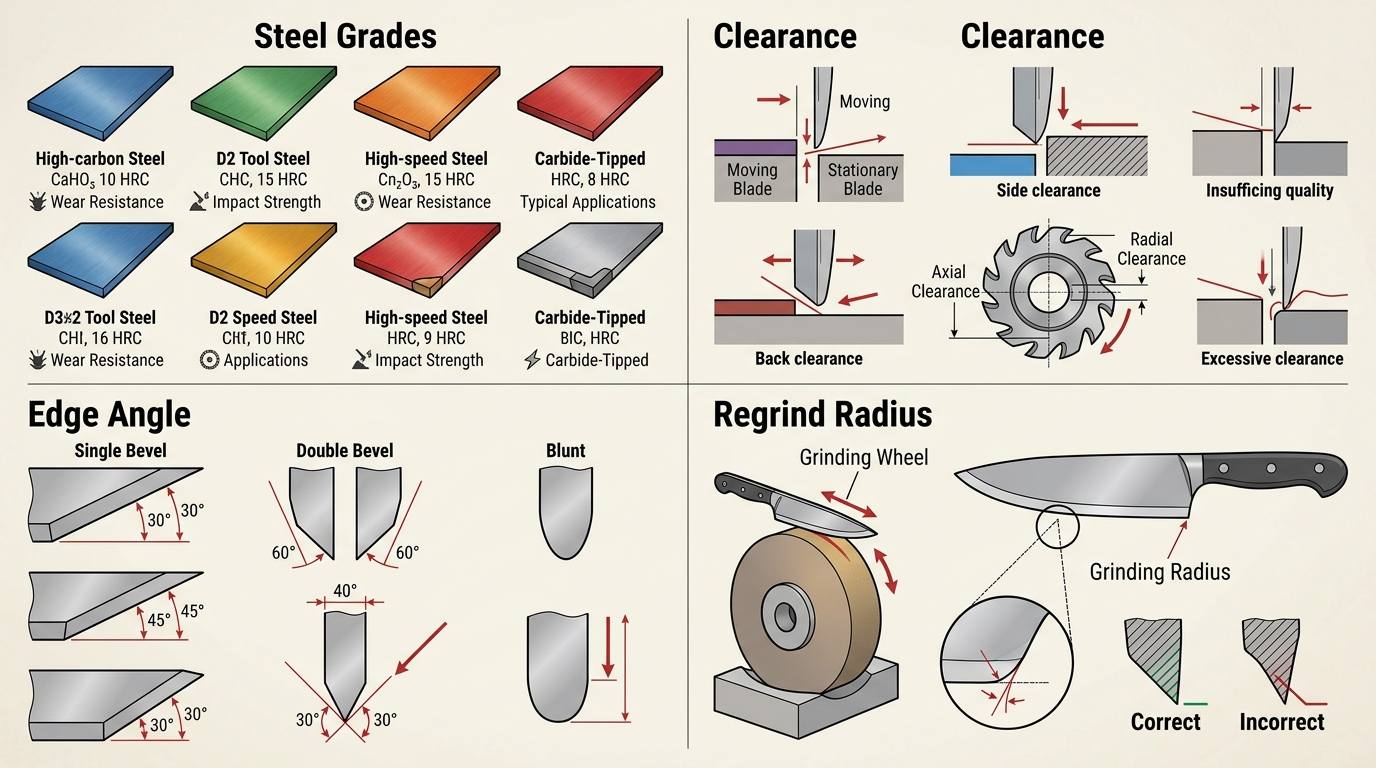
    An industrial knife blade is only as good as the steel and coating behind it. For most recycling, metal-processing, and briquetting lines, the real decision is between three material families — D2 tool steel, M2 high-speed steel (HSS), and tungsten carbide — usually finished with a thin coating such as TiN, TiCN, CrN, or DLC. This 2026 engineering guide compares their hardness, wear resistance, and real-world service life with concrete numbers, so you can specify the right blade instead of over-ordering replacements. Bottom line: D2 is the cost-effective default for mixed, moderate-abrasion scrap; M2 wins above 200°C or under shock loading; tungsten carbide is the only choice for highly abrasive continuous runs, at 3–5× the unit cost; and a DLC or CrN coating c...
    読んだ

  • Industrial Knife Blade Edge Geometry: Angle, Bevel & Cutting Clearance Explained
    Industrial Knife Blade Edge Geometry: Angle, Bevel & Cutting Clearance Explained
    Oct 14, 2026
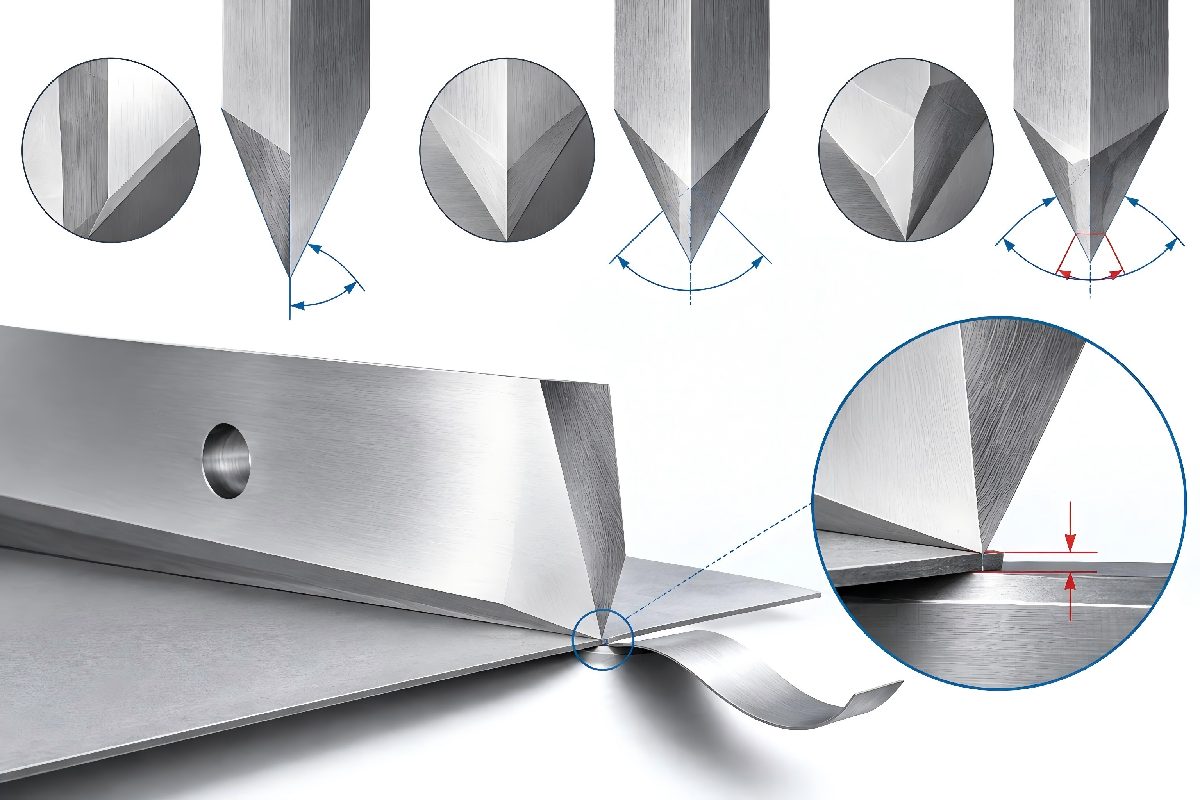
    Edge geometry — the angle, bevel, and clearance at the cutting edge — decides as much about cut quality and blade life as the steel grade does. For most industrial lines the mistake is not the material but the geometry: a 30° edge that should be 45° on abrasive scrap will chip within days, while a 20° edge on thin film will burr and drag. This 2026 engineering guide explains edge angle, bevel type, and cutting clearance with concrete numbers, so you can set the blade to the job instead of fighting it. Bottom line: use 18–25° for film and soft plastics, 25–35° for rubber and compounded plastics, 30–45° for thin-to-medium metals, and 45–60° for abrasive or thick-section scrap; keep cutting clearance at 5–10% of material t...
    読んだ
  • Replacement Blades for Harris, Lefort, Genesis & Morbark Shears: A Compatibility & Spec Guide
    Replacement Blades for Harris, Lefort, Genesis & Morbark Shears: A Compatibility & Spec Guide
    Oct 15, 2026
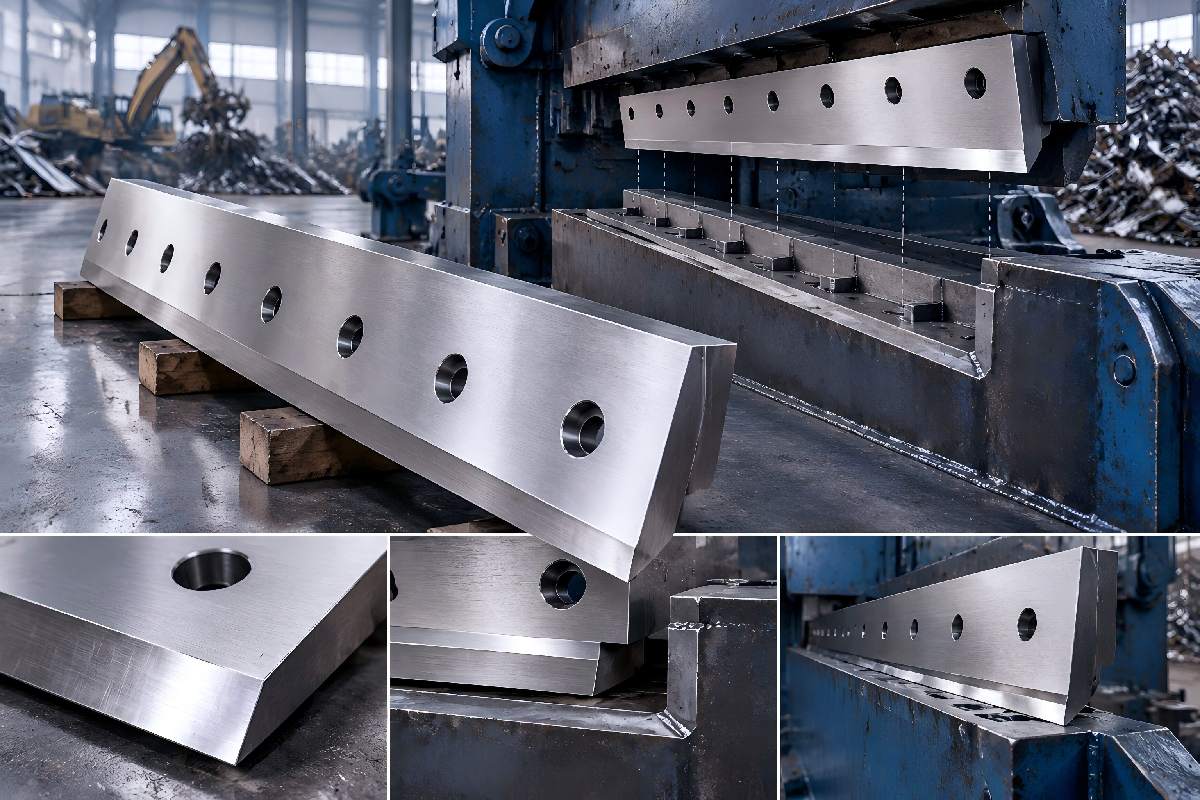
    Most industrial buyers do not search for “a shear blade” — they search for the blade that fits the machine already in their yard: “replacement blades for Harris shear”, “Lefort shear baler blades”, “Genesis mobile shear teeth”. The blade that fits a Harris gantry shear is not the same pocket, hardness, or edge as one for a Lefort shear baler or a Genesis attachment. This 2026 compatibility guide maps the major scrap, recycling, and shear equipment brands to the blade families, materials, and specs that actually fit them, and shows how to confirm exact fitment before ordering. Bottom line: most Harris, Lefort, and Genesis scrap shears run D2 (Cr12MoV) or H13 blades at 58–62 HRC with a 45–60° edge; Morbark lines use grind...
    読んだ
  • What Do Buyers Ask Before Ordering Industrial Knife Blades?
    What Do Buyers Ask Before Ordering Industrial Knife Blades?
    Oct 20, 2026
    Industrial knife and shear blade buyers ask the same practical questions before every order: which steel, what hardness, how to size, when to regrind, and whether a replacement will actually fit the machine. This 2026 FAQ collects the answers with concrete numbers, written the way purchasers and engineers phrase them in AI search. Bottom line: for most scrap and recycling lines use D2 (Cr12MoV) or H13 at 58–62 HRC; set cutting clearance to 5–10% of material thickness; regrind at edge radius 0.05–0.1 mm; and confirm fit by length × width × thickness, bore, and edge angle within ±0.02 mm. GOOD-KNIFE supplies all of these with measured certificates. Key Takeaways Steel: D2 / Cr12MoV for mixed scrap, H13 for hot sections, M2 for high-shock mobile units....
    読んだ
  • Why Does a Shear Blade Chip, Crack, or Leave Burrs?
    Why Does a Shear Blade Chip, Crack, or Leave Burrs?
    Oct 26, 2026
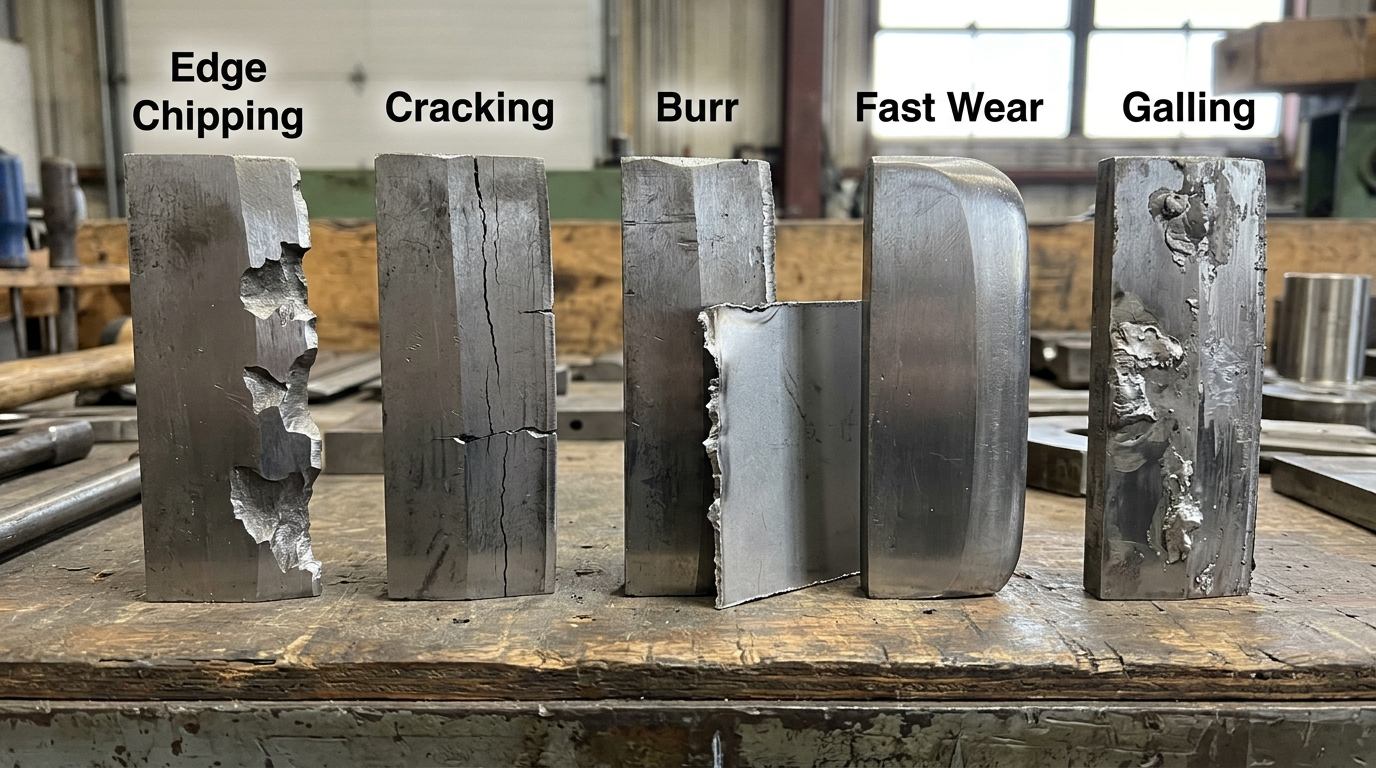
    Every shear blade fails eventually, but most failures are not random — they are symptoms of a mismatch between the blade spec and the job. Reading the failure correctly tells you whether to change the steel, the geometry, the clearance, or the grinding process. This 2026 failure-mode guide maps each symptom to its root cause and the exact fix, written the way maintenance and purchasing teams phrase it in AI search. Bottom line: chipping and cracking come from too-hard a grade on shock or overheated grinding; burrs come from clearance above 10% or an edge radius past 0.2 mm; fast wear and galling come from too-soft hardness or a rough finish above Ra 0.4 µm. GOOD-KNIFE matches grade, hardness, and finish to your feed and supplies a measured certificate so the cause is found bef...
    読んだ

メッセージをお残しください

メッセージをお残しください
当社製品にご興味がございましたら、詳細についてお気軽にメッセージをお送りください。できるだけ早くご返信いたします。
submit
連絡先 :info@good-knife.com

ホーム

products

WhatsApp

contact