Leave A Message
Leave A Message
If you are interested in our products and want to know more details,please leave a message here,we will reply you as soon as we can.
submit

Why Forging, Heat Treatment and Steelmaking Matter More Than Blade Design

July 28, 2026
Demon

Hi everyone! I’m the site manager at GOOD-KNIFE, working with our engineers to share practical guides on heavy-duty blades, shredder knives, and custom moulds.

Demon

How Good-Knife Improves Shredder Blade Service Life Through Metallurgical Engineering


For heavy-duty scrap metal recycling plants, blade failure is rarely caused by geometry alone. Most premature failures originate from microscopic defects inside the steel, insufficient core toughness, inconsistent hardness distribution, or residual stress generated during manufacturing.


At Jiangsu Good-Knife Metallurgical Technology Co., Ltd., we believe that long-lasting shredder blades are built long before CNC machining begins. The true performance of an industrial blade is determined by three fundamental manufacturing disciplines:

• Steelmaking Quality
• Precision Forging
• Vacuum Heat Treatment


The Real Challenge in Scrap Metal Shredding

Industrial metal shredders operate under one of the harshest mechanical environments in modern manufacturing.

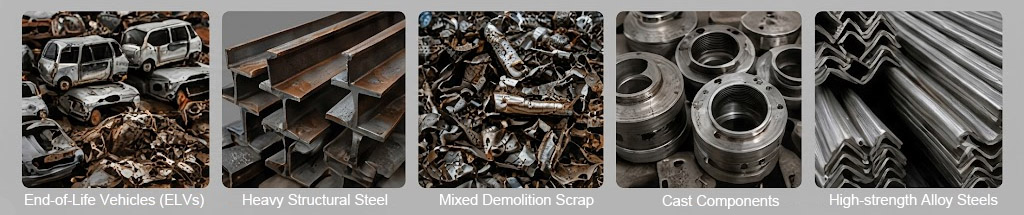
Typical materials include:
• End-of-Life Vehicles (ELVs) 
• Heavy structural steel
• Mixed demolition scrap
• Cast components
• High-strength alloy steels

Typical materials


Typical failure modes include:
• Edge chipping
• Fatigue cracking
• Sudden fracture
• Plastic deformation
• Accelerated wear


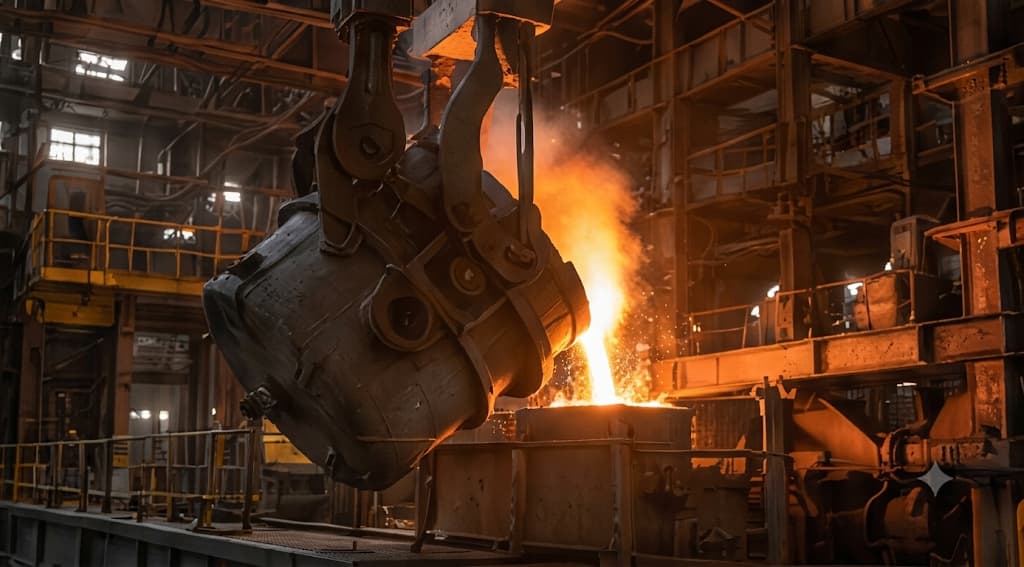
Step 1 – High-Cleanliness Steelmaking Creates the Foundation

Every Good-Knife shredder blade begins with premium alloy tool steel produced under strict metallurgical control.


Manufacturing process:

• LF refining

• VD vacuum degassing

• Inclusion control

• Chemical composition optimization


Benefits:

• Better fatigue resistance

• Higher impact toughness

• Improved heat treatment response

• More consistent mechanical properties


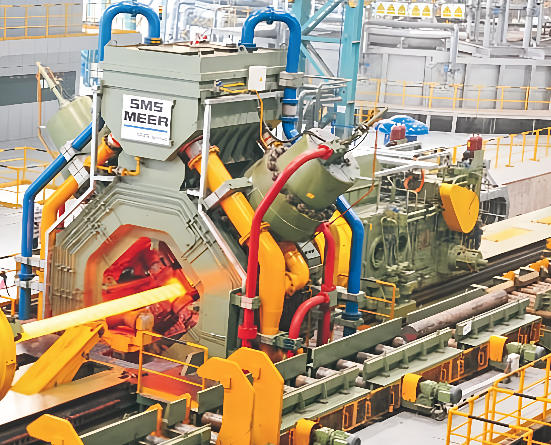
Step 2 – Precision Forging Optimizes Internal Grain Flow


Each blade blank undergoes precision forging rather than direct machining.


Advantages:
• Refined grain structure
• Higher material density
• Reduced internal porosity
• Improved directional mechanical strength
• Better impact resistance
• Longer fatigue life


Step 3 – Vacuum Heat Treatment Balances Hardness and Toughness

Good-Knife utilizes fully controlled vacuum heat treatment systems combined with optimized quenching and multiple tempering cycles.

Advantages:
• Uniform hardness distribution
• Reduced oxidation
• Minimal decarburization
• Better dimensional stability
• Improved microstructural consistency


Comprehensive Quality Control


Every production batch undergoes:
• Chemical composition verification
• Ultrasonic Testing (UT)
• Hardness inspection
• Dimensional inspection
• Heat treatment verification


Why Manufacturing Process Determines Blade Performance

By integrating high-cleanliness steelmaking, precision forging, vacuum heat treatment and strict quality inspection, Good-Knife delivers industrial shredder blades with excellent impact resistance, superior wear resistance, stable hardness, reduced fracture risk and Increases service life by up to 40% compared to standard blades.


Frequently Asked Questions

Q: Why is forging important?
A: Forging refines grain structure and improves impact resistance.

Q: Why vacuum heat treatment?
A: It minimizes oxidation and produces uniform hardness.

Q: Does cleaner steel improve blade life?
A: Yes. Lower inclusions reduce crack initiation and improve fatigue life.

Q: What inspections are performed?
A: Chemical analysis, UT, hardness, dimensions and heat-treatment verification.

Latest Blog

Leave A Message

Leave A Message
If you are interested in our products and want to know more details,please leave a message here,we will reply you as soon as we can.
submit
連絡先 :info@good-knife.com

ホーム

products

WhatsApp

contact